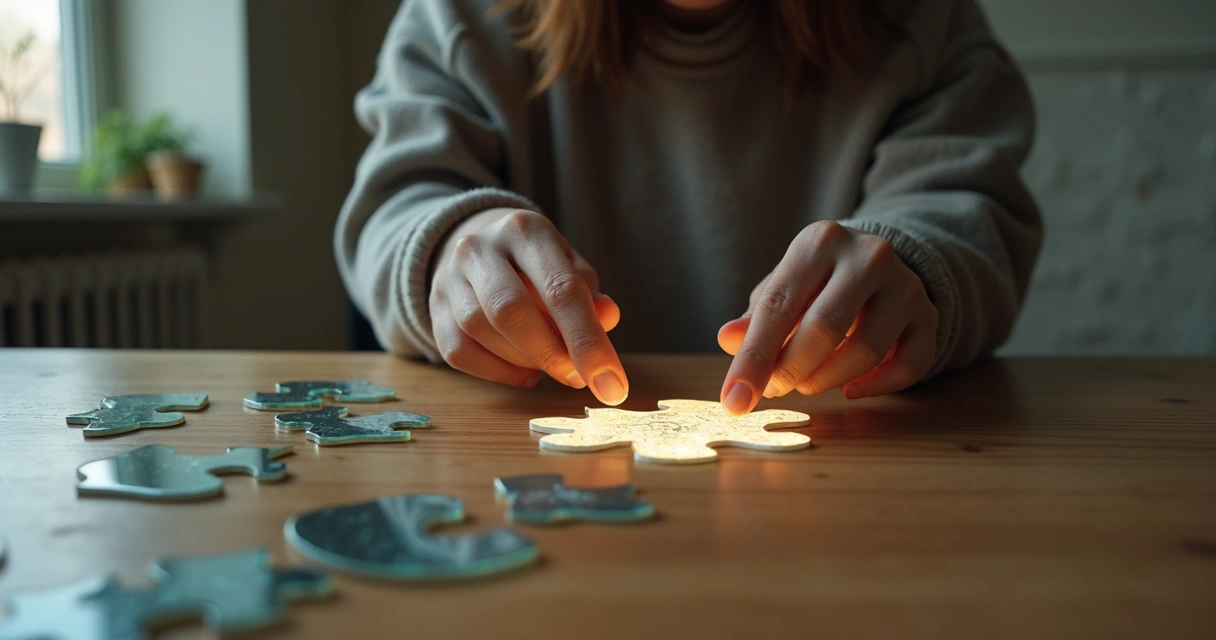

Have you ever wondered why you react a certain way in moments of stress? Or why some decisions feel almost automatic, repeating themselves across generations? Unseen but powerful, family patterns often guide the small and big choices in our everyday lives. Recognizing them is the first step toward conscious change.
Understanding what family patterns are
Family patterns are recurring emotional responses, behavioral habits, and belief systems that develop within our family of origin. These patterns often pass quietly from one generation to the next, shaping our way of relating to others, making decisions, and even viewing ourselves.
We absorb more from our families than we realize.
They are not limited to obvious traditions or routines. They can include the way a family handles conflict, processes grief, celebrates achievements, or manages money. Each family develops its own emotional climate—the invisible rules that dictate what is talked about, what is avoided, and how problems are solved.
How family patterns influence decision-making
Most of our daily decisions are not made in a vacuum. We carry an internal blueprint formed by our early experiences, family values, and observed behaviors. Sometimes, we find ourselves making choices that reflect our parents’ attitudes or reacting emotionally just as we saw adults do in childhood.
Studies show that family members often have a shared influence on significant decisions, from food choices to financial planning. For instance, fathers and children can play strong roles in household food decisions, with influence changing based on context. Even in adolescence, young people who participate in joint family decisions are less likely to engage in unhealthy behaviors or suffer negative health outcomes (analysis of adolescent decision patterns).
Common areas shaped by family patterns
Here are some areas where family patterns often show up:
- Conflict resolution methods: silent avoidance, open confrontation, mediation, etc.
- Emotional openness or suppression
- Financial management and spending habits
- Career choices and ambition
- Relationship dynamics—attachment, trust, boundaries
- Attitudes toward health, self-care, and diet
These patterns can be rigid or flexible, spoken or unspoken. The more we recognize them, the more we can choose how to respond instead of repeating them simply by default.
Why patterns are hard to spot
Recognizing a family pattern is like trying to see your own shadow. We often assume “that’s just how things are.” After all, these habits and beliefs are part of the fabric of our upbringing. Their familiarity can make them almost invisible until something—an unexpected conflict, a repeated mistake, or an outside relationship—brings them to light.
It’s common to notice these patterns most sharply when entering new environments or relationships. Suddenly, our automatic responses stand out against different family habits or values. We might wonder, “Why am I so quick to feel responsible for others?” or “Why do arguments about money feel so heated?”
The patterns we live by can become most clear in contrast.
Recognizing your own family patterns
We think the key is gentle curiosity. Instead of harsh judgment, we recommend observing reactions and decisions with attention and openness. Here are some practical ways to begin uncovering the family patterns influencing our choices:
- Notice repeated themes. Patterns become visible in what repeats—arguments about the same topics, similar challenges in different contexts, or familiar feelings in new situations.
- Reflect on emotional reactions. Strong feelings can be signals of underlying patterns. Ask where a certain anger, guilt, or fear might come from. Did you see similar emotions growing up in your family?
- Track your self-talk. Often, our internal voices echo our parents’ words and rules, shaping our decisions without us noticing.
- Ask about family stories. Sometimes, older relatives hold insights about how certain behaviors began. Gently asking about family history can provide context for current patterns.
- Compare with other families. Without judgment, observe how friends or partners approach common decisions. Noticing differences can help clarify what’s learned and what might be a family-specific pattern.
Every family has its own unique blueprint. Identifying it can help us move from unconscious repetition to conscious choice.

How to reflect on personal decision-making
Personal change starts with honest reflection. Here are some guiding questions we use to support this process:
- When faced with big decisions, whose voice do I hear in my mind?
- What kinds of choices make me feel anxious or guilty? Where might that feeling start?
- Have I ever found myself following a family “script” even when I disagreed?
- Are there family sayings, beliefs, or stories that shape my life approach?
- Which decisions do I find myself repeating, and did anyone in my family act in a similar way?
Writing down thoughts or discussing observations with a trusted person can make these patterns more visible.
The impact of patterns on health and well-being
These family imprints are not about blame, but about awareness. When we operate on autopilot, we risk repeating choices that no longer serve us. This has even been shown in health and lifestyle studies.
For example, families that make decisions together tend to have healthier outcomes for all members. Joint decision-making has been shown to reduce the risk of negative health conditions in adolescents, as seen in research on adolescent and family decision-making.
In a cross-sectional study, 82% of respondents reported already making household decisions together, highlighting how collaboration can become a pattern itself. On the other hand, when patterns become rigid or controlling, they can shape lives and limit possible growth.
A study focused on women’s participation in household decisions revealed that even in areas such as health, shopping, and social visits, involvement varies widely. For instance, over half of women in a Cameroon sample participated in these areas. When family patterns restrict participation, autonomy and growth can be affected.

Moving from unconscious habit to conscious choice
We believe the goal is not to erase our origins but to integrate them consciously. This means seeing the patterns, choosing what to keep, and gently letting go of what holds us back. Growth involves recognizing loyalty to the past and daring to act differently when needed.
Change comes when we shift from reaction to conscious response.
In practice, this might look like pausing before making a decision and asking if the choice is coming from personal values or inherited scripts. It means making room for new ways of being, experiment with new behaviors, and allow for mistakes and learning.
Recognizing and updating family patterns is a lifelong process. Each insight offers a chance to live more freely, and each conscious step is a small act of maturity and self-responsibility.
Conclusion
Most of us shape our lives, at least partly, by family patterns. We may not be able to control the family we were born into, but we can decide how much we let those old patterns dictate our future. By becoming aware, reflecting honestly, and making conscious choices, we step closer to living a life that is truly our own—integrated, authentic, and meaningful.
Frequently asked questions
What are family patterns in decision making?
Family patterns in decision making are recurring ways that families approach choices, problem-solving, and handling emotions that develop over time and often repeat across generations. These patterns form a kind of “operating system” that influences how we react in relationships, make daily decisions, and face challenges together.
How can I spot my family patterns?
We encourage starting by noticing what repeats in your actions, feelings, and family stories. Pay attention to situations where your reactions feel automatic or strongly emotional. Ask yourself if you’ve seen similar behavior in other family members, and observe dynamics in different families for contrast. Writing about your decisions or talking with a trusted person can also help make these patterns clearer.
Why do family patterns affect my choices?
Family patterns shape your beliefs, emotional responses, and default habits from an early age, often before you’re aware of them. Since they are formed in childhood, they feel familiar and safe, and we tend to return to them when under stress or facing uncertainty. They persist until we notice and decide on a more conscious approach.
Can I change unhealthy family patterns?
Yes. While it can take time and self-awareness, recognizing and reflecting on an unhealthy pattern is the first step to change. From there, you can experiment with new responses, seek support if needed, and practice making choices that fit your values, not just your inherited habits.
What are common signs of family patterns?
Common signs include feeling stuck in repeated arguments, noticing similar relationship struggles across generations, or hearing familiar phrases and beliefs in your inner self-talk. Other signs are emotional reactions that seem exaggerated or automatic and persistent guilt or fear around certain kinds of decisions. These hints often show there is an old pattern ready to be recognized and updated.