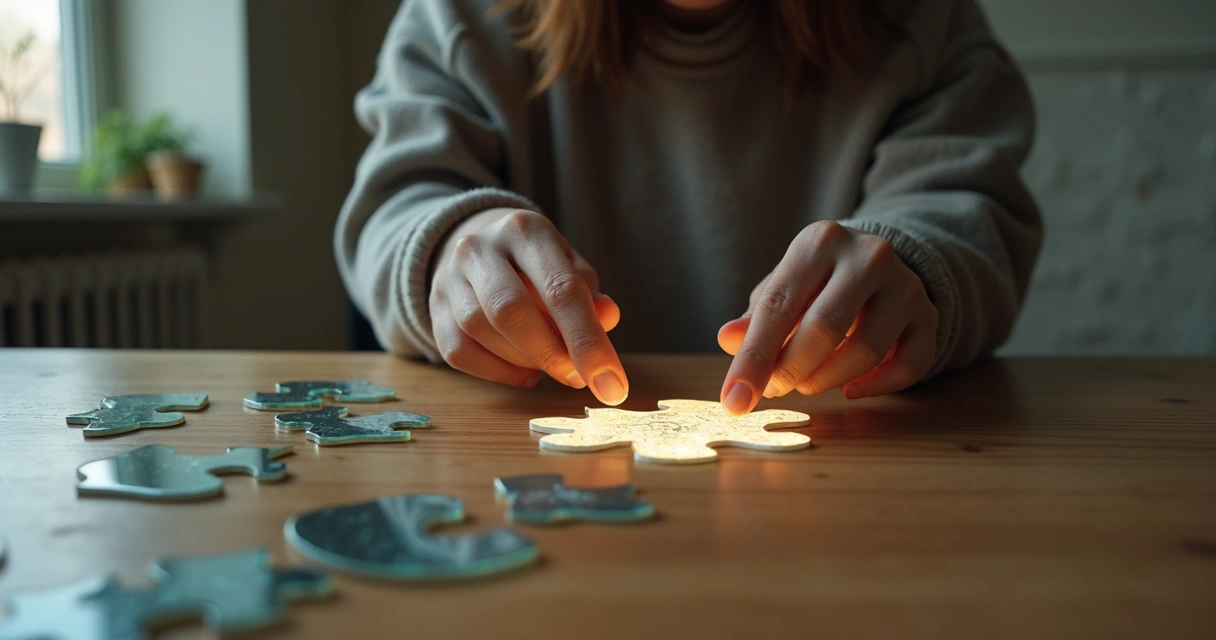

We have all found ourselves stuck in our thoughts, circling around the same worries or questions. Sometimes, we walk away with new insights. Other times, we simply end up tired. The difference is not always obvious, but there is a clear line: overthinking on one side, deep reflection on the other.
Not all thinking leads to growth.
In our experience, learning to know the difference between overthinking and deep reflection is key for maturity and self-knowledge. When we understand what state we are really in, we can step out of mental loops and move toward clarity and inner peace.
What is overthinking?
Overthinking means getting caught up in worries, regrets, or endless analysis. We replay conversations from yesterday or imagine possible problems tomorrow. The mind becomes noisy, restless, often searching for certainty in a place where no clear answer exists.
Overthinking is repetitive mental activity that does not lead to meaningful action or new understanding. It is often based on fear, anxiety, or self-doubt. The same questions appear: “What if I fail?” “Why did I say that?” “Could I have done something different?” The mind swirls, but nothing new comes out of it.
- Tends to be negative or anxious.
- Is circular—it loops, not progresses.
- Keeps us distant from emotions, as if thinking will protect us from feeling.
- Rarely leads to action or change.
We have watched how overthinking drains energy and can even lead to procrastination, indecision, or emotional block.
What is deep reflection?
Deep reflection, by contrast, brings us closer to our experience. This is not about thinking the same thought over and over, but about slowly, consciously, looking at ourselves or a situation as a whole.

Deep reflection connects us to ourselves and helps us gain clarity about our emotions, motivations, and choices. We focus on understanding, not just repeating. There is space for feeling, not just analyzing.
- Welcomes both questions and emotions.
- Moves forward, even if slowly, toward insight.
- Encourages responsibility and acceptance.
- Leads to some kind of inner or external shift, whether small or big.
In deep reflection, we respect the mystery of life and let real answers emerge, rather than forcing an outcome.
How to recognize overthinking vs. deep reflection
Sometimes, we ask ourselves: “Am I really reflecting, or just overthinking?” Signs can help us notice which path we are on.
Signs of overthinking
- You find yourself stuck on the same worries or regrets for days, weeks, or even months.
- Your inner dialogue sounds more like criticism than curiosity.
- There’s little or no action—just rumination.
- You often feel mentally exhausted or tense afterwards.
- Emotions get pushed away, ignored, or seem overwhelming.
- You search for “the right answer” or certainty, but never find it.
If thinking leaves you more anxious, drained, or indecisive, it is likely overthinking rather than reflection.
Signs of deep reflection
- Your thoughts move forward, even if slowly, and connect different aspects of your life.
- You’re in touch with how you feel, even if it is uncomfortable.
- The process feels open and curious, rather than judgmental.
- Clarity, understanding, or acceptance eventually arise.
- You often feel lighter or more at peace after reflecting.
- There is willingness to act, shift perspective, or let go.
Reflection brings fresh air to our inner world.
We believe that listening to our emotions is a reliable compass out of confusion.
What causes overthinking?
Through our observations, overthinking is often rooted in fear. Fear of making mistakes, fear of judgment, or fear of feelings we do not want to face. Sometimes it comes from trying to gain control in uncertain settings, as if thinking enough might guarantee safety or results.
Trying to control every detail of life by thinking keeps us distant from the present moment and our real feelings. Overthinking can also become a habit—a pattern we follow automatically during stress or when we want to avoid discomfort, especially emotional pain or uncertainty.
Childhood patterns, perfectionism, or pressure to perform can deepen these habits, making it harder to trust our intuition.
What encourages deep reflection?
Deep reflection grows out of presence. When we slow down and really pay attention to our inner world, not just our thoughts but also our sensations and feelings, a new type of understanding emerges. Gentle curiosity is the key.
- Allowing emotions to appear, even when difficult
- Recognizing patterns in thoughts and behavior
- Asking genuine, open-ended questions
- Accepting uncertainty and not demanding quick answers

We often find that reflection flourishes in a supportive space, such as journaling, talking to a trusted person, or spending time in nature.
Why does the difference matter?
Understanding this difference shapes the way we relate with ourselves and others. Overthinking often leads us away from the present, while deep reflection invites us back. One leaves us drained, the other renews us.
Moments of reflection open the door to meaningful change and responsible living. When we recognize the signs, we can gently pause and ask ourselves, “What am I really doing right now: looking for understanding or avoiding a feeling?”
Each time we choose reflection over rumination, we make space for genuine growth.Simple ways to shift from overthinking to reflection
Sometimes it takes only a small adjustment to move from spinning thoughts to deeper awareness. Here are a few ways we have noticed can help:
- Slow your breath. Notice how your body feels, not just what you think.
- Name what you are feeling with gentle honesty—no judgment.
- Write down thoughts, separating facts from stories or fears.
- Ask yourself what you can control, and what you cannot.
- Take a short walk without distractions. Let the mind settle naturally.
We found that the more we practice these small pauses, the easier it becomes to step out of the mental loop and return to clarity and calm.
Deep reflection is not about perfect answers, but about asking true questions.
Conclusion
Overthinking and deep reflection may both look like thinking, but only one leads home to ourselves. Overthinking spins in circles with worry and fear, while deep reflection moves us forward, sometimes through discomfort, toward growth and understanding.
With awareness, we can notice when we are stuck and choose to shift. Each small act of reflection brings us closer to the present, to responsible choice, and to a life lived with more clarity.
Frequently asked questions
What is overthinking vs deep reflection?
Overthinking is a repetitive, anxious pattern of thought that usually leads nowhere new, while deep reflection is a purposeful, calm process that connects thoughts, feelings, and insights.Overthinking often avoids feelings and brings little change, while deep reflection includes emotions and supports genuine maturity.
How can I stop overthinking things?
We recommend pausing and noticing your breath, naming your emotions, and gently bringing focus to the present. Writing thoughts down, spending time in nature, and asking yourself what you can or cannot control are helpful.
What are signs of deep reflection?
Signs of deep reflection include moving forward in your thoughts, feeling connected to your emotions, gaining clarity, and often feeling more at peace or ready to act.You may notice more acceptance, curiosity, and willingness to see things as they are.
Is deep reflection better than overthinking?
We find deep reflection is more likely to lead to growth, understanding, and responsible action, while overthinking tends to create stress and keep us stuck. Deep reflection respects both thought and feeling, opening paths for change.
How do I practice deep reflection?
Practicing deep reflection can start simple. Try setting aside quiet time, journaling without self-judgment, or asking open questions about how you feel and what matters to you. Bringing kind awareness to both thoughts and feelings supports deeper insight and inner clarity over time.