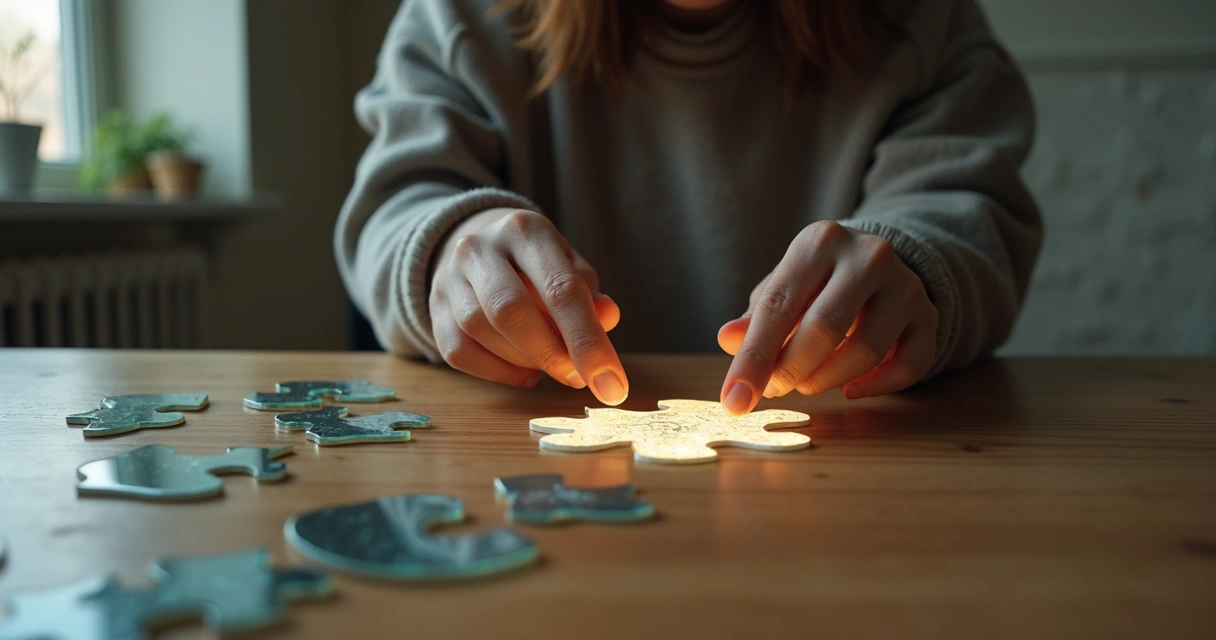

We all participate in relationships daily—at work, with family, with friends, or in romantic life. Sometimes, we notice that similar difficulties repeat, regardless of who we interact with. Patterns like avoidance, mistrust, or self-sabotage circle back, as if scripted. These are often unconscious relational patterns, shaped by past experiences, reinforced over time, and running beneath our awareness.
What are unconscious relational patterns?
Unconscious relational patterns are learned ways of responding and relating to others that operate out of awareness, influencing our behavior, thoughts, and emotions in relationships. They often originate from formative experiences—early attachment, repeated feedback, or modeling from influential relationships. Over time, these patterns become automatic, showing up in subtle habits or noticeable reactions.
We might experience them as a recurring feeling of being misunderstood, a tendency to withdraw in conflict, or the belief that we must please everyone to be liked. Sometimes, they are so woven into our sense of "how things are" that we mistake them for reality itself.
"Patterns shape our choices before we even know we have a choice."
Recognizing the signs in daily life
In our experience, the first step in shifting patterns is recognizing them. This process usually comes with discomfort—a gnawing sense that something in our connections feels off, repetitive, or unsatisfying. Here are some signs that can signal an unconscious relational pattern is at play:
- Conflict has a familiar flavor or script, even with different people
- Strong emotional reactions that feel out of proportion to the situation
- Persistent roles in relationships—being the fixer, the victim, the pursuer, or the avoider
- Expectations that others will behave a certain way, regardless of context
- Feeling "stuck," like the same argument or dynamic never resolves
- Repeated types of partners or friends over time
It's easy to dismiss these as personality traits or coincidences. But when they become consistent across many different contexts, we suggest considering the possibility of an underlying pattern.
Why do these patterns form?
Our relational habits often arise as protective strategies. As children and young adults, we learn what behaviors keep us safe, loved, or accepted. Sometimes, those adaptive responses become rigid. For example, if we experienced criticism growing up, we may have developed a habit of keeping quiet or agreeing with others to avoid disagreement. Later, this can translate to difficulty asserting ourselves as adults.
Patterns are the mind and body's way of keeping us comfortable and avoiding perceived threats—a tool that, over time, turns into a limitation.
Bringing patterns to the surface
We find that observation is the most honest entry point. Shining a gentle light on our reactions, triggers, and relationship themes opens a path to conscious change.
- Pause in moments of strong emotion. When we are most upset or reactive, we are likely in the grip of an old pattern. Instead of acting right away, we can take a breath, notice our body, and simply allow the feeling to arise.
- Write down repeat situations. Keeping a journal of when we feel misunderstood, upset, or withdrawn can make repeating dynamics visible. What happened just before? What were the feelings? Over time, patterns of interaction become clearer when we see them in writing.
- Ask trusted people for feedback. Others sometimes see in us what we miss ourselves. Posing an open question, such as "Do you notice I react a certain way when we argue?" can start a new layer of awareness.
Often, these steps are more uncomfortable than we expect. Patterns thrive in shadows; bringing them into the open asks for honesty and courage.

Understanding triggers and core beliefs
Often, our patterns are wired to triggers—words, behaviors, or situations that spark old reactions. We may not be aware we’re being triggered, but our body and mind react as if threat is near.
When a trigger occurs, it quickly activates a core belief or expectation about ourselves, others, or the world. Examples include "I am not safe," "No one will listen to me," or "I must be perfect to be loved."
We believe that linking patterns to triggers and core beliefs gives us leverage. It is not about self-blame; it's about getting curious. Why do I always pull away when someone disagrees? What am I protecting? What do I expect to happen?
"Awareness is the first step towards freedom."
Shifting unconscious patterns: step by step
Bringing awareness is only the first move. Next comes the slow work of consciously choosing something different. We suggest focusing on small, practical shifts:
- Practice mindful presence. When a familiar pattern starts up, notice where your attention goes. Name the feeling or thought, gently, without self-judgment. Sometimes even labeling the experience ("I am shutting down right now") loosens its grip.
- Experiment with new responses. Try something that interrupts the usual script. If you usually withdraw, stay. If you always apologize first, wait. When we break one small part of the pattern, the whole structure begins to shift.
- Care for the underlying need. Every pattern began as a solution to a need—safety, love, respect. Instead of fighting the pattern, ask what real need is beneath it, and find a new, adult way to meet it.
- Keep a reflection cycle. After moments of change, write down what happened, how it felt, and what you learned. Patterns do not dissolve overnight. Patience and reflection are our allies.
The role of self-compassion
Unlearning old habits can be tender work. We encourage the gentle approach—reminding ourselves that patterns, even the least helpful ones, were developed to make life easier at some point. Awareness, paired with self-compassion, allows real change to emerge.

This is not about perfection. Even as we become more aware, we will fall back into old patterns sometimes. Kindness to ourselves, rather than harsh self-judgment, is what makes space for healthy change.
When to seek support
There are times when the roots of relational patterns run deep, intertwined with trauma, neglect, or difficult family histories. In such cases, the support of a skilled professional can make the process safer and more effective. We see therapy not as a sign of weakness, but of courage—the willingness to face what lies beneath and transform it into something more whole.
"There is no shame in seeking support. Every step towards awareness transforms our story."
Conclusion
Unconscious relational patterns are not flaws in character. They are simply old strategies, once helpful, now outgrown. By bringing attention, curiosity, and patience, we can notice these patterns, break free from the automatic, and make more conscious choices in our connections. Each small act of awareness plants the seed for new ways of relating—to others, and to ourselves.
Frequently asked questions
What are unconscious relational patterns?
Unconscious relational patterns are automatic habits or responses we bring into relationships, often shaped by early experiences and operating outside our awareness. They influence our reactions, choices, and the types of relationships we form.
How can I spot my patterns?
Start by looking for repetition: do the same issues, feelings, or types of conflict repeat with different people? Keeping a journal of emotional reactions, asking for feedback, and noticing what triggers strong responses are all helpful ways to see your patterns more clearly.
Why do these patterns repeat?
Patterns repeat because they are designed to help us avoid discomfort or pain, even if they no longer serve us well. Our mind and body stick to familiar responses for a sense of safety, repeating what feels known, not what is healthiest.
How do I change unhealthy patterns?
The first step is awareness—recognizing when a pattern is active. Then, experiment with new responses, care for the needs beneath these patterns, and reflect on your experiences. Small, consistent changes, backed by self-compassion, are the most sustainable way to shift even the oldest habits.
Is it worth it to seek therapy?
Seeking therapy can be very helpful, especially when patterns are linked to past trauma or feel too difficult to change alone. Working with a professional provides support, guidance, and tools to understand and transform relational patterns in a safe environment.